
Has the Wall Outlet Lost Its Punch After a Year of Diffuse Oxygen? Concentration Cannot Be Judged by Feel Alone: A Home Diffuse-Oxygen Maintenance and Self-Check Guide
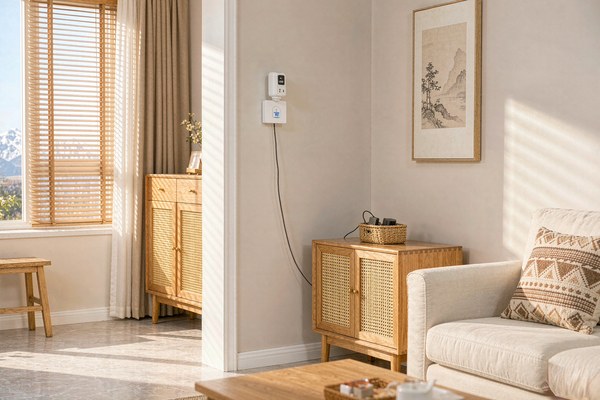
For the first six months after a whole-home diffuse oxygen system is installed, the experience is usually excellent: there is an outlet on the wall, no nasal cannula to wear, and eating, talking, and sleeping are all undisturbed. The problems tend to appear in the second year — the outlet is visibly releasing oxygen, but how much oxygen is actually left in the room? This is not something "feel" can guess at. This article covers daily maintenance and oxygen-concentration self-checks for home diffuse oxygen systems.
1. Diffuse oxygen and "a cannula in your nose" are not the same thing
Nasal-cannula oxygen is "point to point": oxygen goes straight into the nose, the dose is explicit, and the response is immediate. Diffuse oxygen "soaks the room": the main unit sends oxygen through pipes to outlets in each room, releasing it continuously at a low flow, slowly raising the oxygen concentration of the whole space. People moving around and sleeping inside are, in effect, "passively supplemented".
The benefit is that nothing is attached to you; the cost is heavier dependence on the system. The main unit, filters, pipes, and terminals — any link that degrades will discount the result, and the degradation is silent: with a cannula you know at once when the oxygen stops. That is why a diffuse-oxygen household needs two things even more than a cannula household does: daily maintenance and periodic self-checks.
2. Why self-check: degradation in a diffuse system is "hidden"
Molecular sieve material degrades with use; a clogged filter cuts intake airflow; ageing pipe joints develop micro-leaks; dust accumulates on terminal grilles. The shared symptom of all these problems is "oxygen is still coming out, but concentration and flow are no longer what they were". The room's oxygen enrichment depends on three factors: output concentration, release flow, and how well sealed the room is. In a poorly sealed room, oxygen quietly escapes while the electricity bill keeps running.
The purpose of self-checking is not to replace professional testing, but to catch "obviously wrong" early. Relevant standards include GB 50751-2012, Technical Code for Medical Gas Systems, and YY 9706.269-2021, safety and performance requirements for medical oxygen concentrators. Systematic pressure and concentration testing should be carried out by professionals in accordance with the standards.
3. Daily maintenance checklist: main unit, terminals, pipes
Main unit (weekly / monthly):
1. Check the intake filter once a week, more often in the windy, dusty season; clean or replace it when dirty. This is the cheapest and most commonly overlooked item.
2. Change the water in the humidifier daily, preferring sterile distilled water or cooled boiled water; wash it weekly to avoid biofilm.
3. Leave clearance around the unit for heat dissipation. If unusual noise, overheating, or frequent alarms appear, stop using it and call for service first.
4. For rooms left unoccupied for long periods, power the unit on regularly to keep components from damp and seals from ageing.
Terminals (weekly):
1. Wipe the panel of each room's oxygen outlet weekly to stop dust blocking the outlet grille.
2. Stand at the terminal and check whether the airflow is even and steady, and listen for a "hissing" leak.
3. Before drilling new holes or hanging heavy items in a room, confirm the route of the pipes inside the wall first — one nail can rupture a pipe.
Pipes (monthly):
1. Avoid crushing or hanging loads on pipes running along walls. If joints harden, crack, or seep, call a professional for replacement; do not patch them with tape yourself.
2. Oxygen-supply pipes are medical gas piping; any modification must be carried out by professionals.
4. Oxygen-concentration self-check: what you can and cannot do at home
What you can do at home: first, instrument readings. If you own a portable oxygen-concentration meter, take readings at each room's terminal regularly as instructed and log them, building your own "baseline", and investigate when a clear drop appears. Second, comparison. At the same flow setting, check whether airflow is consistent across rooms; if one terminal is clearly weaker, examine the terminal first, then the pipes. Third, personal reference. A resting pulse-oximeter reading is a useful daily reference, but it reflects the individual only and cannot stand for the room's environmental oxygen concentration.
What you cannot do at home: system pressure testing, pipe-seal inspection, and precise measurement of the main unit's output concentration all require professional instruments and standard procedures; an annual inspection is recommended. If concentration or flow is clearly abnormal, stop using the affected terminal, keep basic ventilation going, then contact after-sales service. Do not dismantle the machine or pipes yourself.
5. Frequently asked questions
Q: With diffuse oxygen running, does the room become "the lowlands"?
A: No. It raises the environmental oxygen concentration and eases hypoxia; it does not change altitude itself. The effect depends on oxygen output, room size, and how well sealed the room is, so keep your expectations realistic.
Q: Is it good to point the oxygen outlet at the bed?
A: Direct blowing is not advisable. During installation the outlet should be kept away from the head of the bed and from places where people spend long periods; an oxygen stream blowing directly at the face easily brings nasal dryness and discomfort.
Q: The main unit has been used for three years — is it time to replace it?
A: Look at the data, not the age. Actual sieve degradation is related to usage intensity, dust, and voltage stability. Run one concentration test and let the data decide whether to repair or replace.
Q: Can diffuse oxygen and nasal-cannula oxygen be used at the same time?
A: They can complement each other, but do not stack flow rates on your own. For patients such as those with COPD, who must strictly control inhaled oxygen concentration, any adjustment should be determined after a doctor's assessment.
The right posture for diffuse oxygen is, in the end, the opposite of "install it and forget it": wipe the terminals and wash the filters every week, run a test once a year, and keep the concentration figures in mind. Only then can the system truly hold up a whole household's sleep. Xizang Kuyang maintains a local warehouse and service network in Lhasa with 48-hour response, offering on-site installation, filter replacement, and annual inspection, including on-site testing of diffuse-system pipes and terminals. For any questions about home oxygen-supply planning, call 15608996945.
References: GB 50751-2012, Technical Code for Medical Gas Systems; YY 9706.269-2021, safety and performance requirements for medical oxygen concentrators; Science China, home oxygen therapy science content.
Images are illustrative and may differ from actual product appearance. This article is a general science summary and does not constitute medical advice; follow your doctor's instructions for any oxygen therapy plan.