
Living Long-Term at High Altitude: Recognizing High-Altitude Polycythemia and Doing Home Oxygen Therapy the Right Way
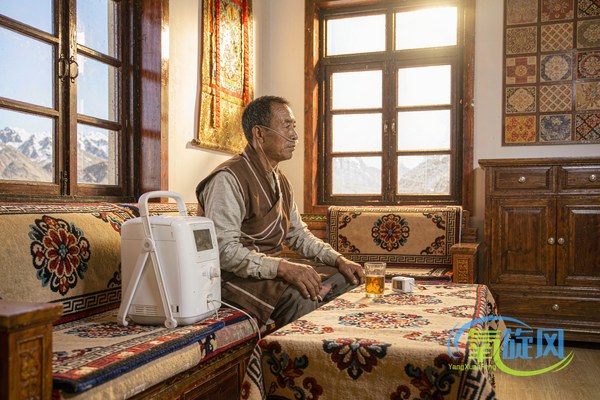
Many friends who have lived for years in Lhasa or Nagqu share similar experiences: feeling easily fatigued, sleeping poorly, and noticing bluish-purple lips. Most assume it will pass on its own. In fact, this may point to a well-defined chronic condition — high-altitude polycythemia (HAPC), known in Tibetan medicine as “Chapé” (blood-increase disorder), one of the most common forms of chronic mountain sickness.
1. Living long-term at altitude: watch out for HAPC
According to the Chinese Expert Consensus on the Diagnosis and Treatment of High-Altitude Polycythemia (2025 Edition), issued by the Red Blood Cell Disease Group of the Chinese Society of Hematology (CMA): anyone who has lived above 2,500 meters for more than six months should consider this condition if hemoglobin reaches ≥210 g/L in men or ≥190 g/L in women, together with headache, palpitations, or sleep disturbance. The consensus notes that at around 3,000 meters on the Qinghai-Tibet Plateau the incidence can reach 24%, and above 5,000 meters it can climb to 63.3%. Data cited by the Expert Consensus on Tibetan Medicine for HAPC, led by the Beijing Hospital of Traditional Tibetan Medicine under the China Tibetology Research Center, show a prevalence of about 1.9% among Tibetans born in Lhasa (approx. 3,680 m) and 5.2% in Ngari (approx. 4,400 m), but up to 25.8% among Han migrants aged 15–45 in Shannan (approx. 3,650 m) — migrants are affected far more often than locals, and men more than women.
2. When should you get a blood test?
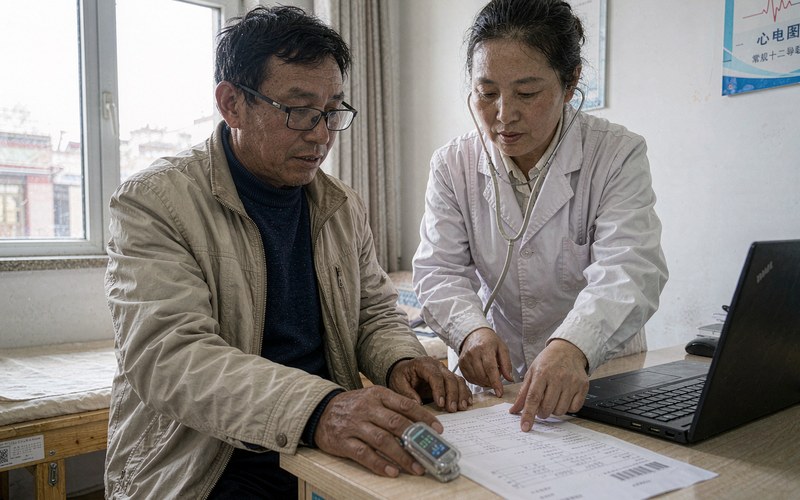
Common signs of HAPC include persistent headache, dizziness, fatigue, palpitations and shortness of breath, poor sleep, memory decline, cyanosis of the lips and fingernails, and a dark reddish, flushed “polycythemic face”. Because these symptoms are non-specific, they are easily mistaken for ordinary altitude reaction or overwork.
Initial screening is simple: a complete blood count, followed by risk stratification with the Qinghai scoring system (eight items including breathlessness, insomnia, cyanosis, headache, tinnitus, and hemoglobin). A score of ≤10 indicates mild, 11–14 moderate, and ≥15 severe disease. Important: diagnosis requires excluding polycythemia vera, chronic lung disease and other causes. Please visit a proper hospital's respiratory or hematology department rather than self-diagnosing.
3. Oxygen therapy is the foundation — but “longer” does not mean “better”
Under the consensus, mild cases are managed with low-flow oxygen therapy and regular follow-up; moderate cases require combined drug and oxygen therapy; those with hemoglobin above 250 g/L, or severe and relapsing cases, may need erythrocytapheresis — and the most fundamental remedy remains moving to a lower altitude.
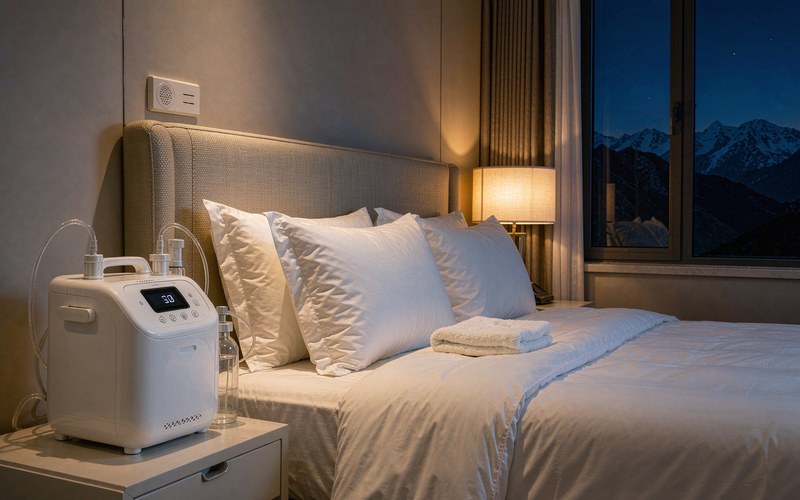
Recommended home oxygen parameters: nasal cannula or mask, 1–2 L/min, either 1–2 hours per session twice daily, or 1 hour per session three to four times daily. Families with suitable equipment can use diffused room oxygen and sleep in an oxygen-enriched room. Li Yubin, chief physician of respiratory medicine at Tibet Fukang Hospital, suggested in an interview with China Tibet Net that each session last about two hours and total daily oxygen time not exceed six hours. Professor Jin Jun of Army Medical University also cautions that prolonged high-flow (over 4 L/min) or prolonged high-concentration oxygen carries a risk of oxygen toxicity; remember to humidify the oxygen to avoid nasal dryness, and keep tubing and cannulas personal and clean.
4. Manage your home oxygen therapy properly
When choosing equipment, medical-grade oxygen concentrators must have a medical device registration certificate from the national drug authority; home models should follow standards such as QB/T 5368-2019. At high altitude, prefer units delivering ≥90% oxygen concentration with noise ≤50 dB. Keep a fingertip pulse oximeter at home and log resting and nighttime readings; clean the filter about every three months and have the unit professionally serviced once a year. Quit smoking, limit alcohol, keep a regular routine, avoid intense exercise, and have your hemoglobin checked in annual health exams. If symptoms worsen, see a doctor promptly.
Tibet Kuyang (xzkuyang.com) maintains local warehousing and repair service in Lhasa, offering door-to-door delivery of home oxygen concentrators and diffused oxygen systems, with 48-hour repair response. For equipment selection, parameter settings or troubleshooting, call 15608996945 anytime.
References:
1. Red Blood Cell Disease Group, Chinese Society of Hematology, CMA; Chinese Hospital Association Hematology Branch. Chinese expert consensus on the diagnosis and treatment of high-altitude polycythemia (2025). Chinese Journal of Hematology, 2025, 46(7): 593-600.
2. Beijing Hospital of Traditional Tibetan Medicine, China Tibetology Research Center. Expert Consensus on Tibetan Medicine for High-Altitude Polycythemia (Chinese Journal of Chinese Materia Medica, online May 2024), including prevalence data for Lhasa, Ngari and Shannan.
3. China Tibet Net, “Oxygen Care for Life on the Plateau” (Aug 27, 2025).
4. People's Daily (PLA Daily), “Using Oxygen at High Altitude the Right Way” (Nov 14, 2021).
Disclaimer: This article is a compilation of popular-science information and does not constitute medical advice. Please follow your physician's guidance for diagnosis and treatment.