
Oxygen-Concentrator Spec Sheets Making Your Eyes Swim? Flow, Concentration, Noise — Get These Straight Before You Pay: A Buying Guide for Plateau Homes
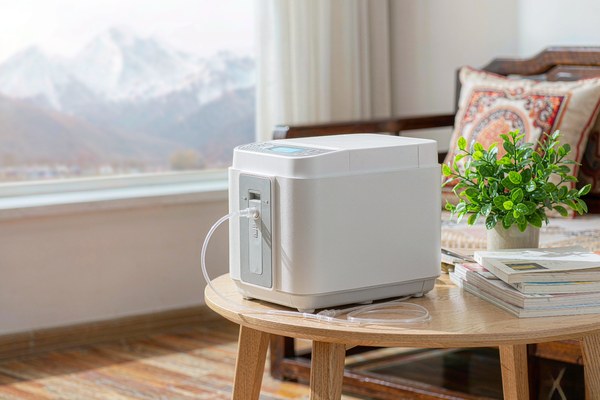
Before winter sets in is the peak season for plateau households to buy oxygen concentrators. Open an e-commerce page and you see "5 L machines", "93% oxygen concentration", "quiet models", "plateau-ready"... every parameter looks better than the last, and it is hard for an ordinary buyer to tell which ones genuinely matter and which are only for show. This article does not talk about brands; it talks about parameters. Before placing the order, get flow, concentration, noise, continuous running, consumables, and altitude compatibility straight, and paying will feel a lot steadier.
1. First be clear: who is it for, where will it be used, and for how long
Before ordering, answer three questions. Who is it for — a healthy young person's backup unit, an elderly person's long-term oxygen therapy, or a patient with COPD who needs the inhaled oxygen concentration strictly controlled? Where will it be used — night-time use in the bedroom, daytime use in the living room, or as the main unit of a diffuse-oxygen system? And for how long — half an hour a day as a backup, or ten-plus hours a day?
Different uses lead to completely different answers. For medical-grade oxygen therapy, flow and concentration must follow the doctor's prescription: choosing a machine is executing that prescription, not replacing the doctor's assessment. For household wellness backup, the trade-off can be balanced around scenarios and budget.
2. Six parameters, examined in order of importance
1) Flow (oxygen output). The unit is litres per minute (L/min), commonly in 1–5 L steps. Nasal-cannula oxygen generally works within 1–5 L; if you want diffuse oxygen supply to raise the concentration of a whole room, what you need is a different class of high-flow main unit — don't force a small-flow machine to do that job. One more thing to keep in mind: the higher the flow setting, the lower the oxygen concentration often is. That is a physical property of molecular-sieve oxygen production. Read parameters in pairs — "concentration at which flow" is what actually means something.
2) Oxygen concentration. Under YY 9706.269-2021, Safety and Performance Requirements for Medical Oxygen Concentrators, the output concentration within the rated flow range should be no lower than 90%, and products on the market are often labelled 93% ±3%. The point is not the peak figure but whether it still meets the standard "at the flow setting you actually use". If a listing only shows a bare "93%" without stating the corresponding flow, keep that in mind as a caveat.
3) Noise. A concentrator works by cycling a compressor and molecular sieve, so it cannot be completely silent. For night-time use in a bedroom, pay attention to the decibel figure, and if you can test the unit on site, so much the better. For placement, put it near the balcony, bathroom, or the next room — a wall between you and the machine often blocks noise more reliably than a "quiet" label does, and you still need to leave clearance around the unit for heat dissipation.
4) Continuous-running capability. Check whether the unit supports long continuous operation and how its heat dissipation is designed. Running it for half an hour a day and running it for ten-plus hours a day are not the same order of demand. Some small lightweight units are designed for "intermittent use"; used as a main unit over long periods, they tend to overheat and trigger alarms.
5) Filters and consumables. The intake filter and filter elements are consumables. Before buying, ask three things: how long the cleaning or replacement cycle is, what a single replacement costs, and whether they can be bought locally. Buying the machine is affordable but running out of consumables is the most common awkward situation for plateau families.
6) Altitude compatibility. This one is the watershed of choosing a machine on the plateau. A molecular-sieve concentrator breathes ambient air; a plain-altitude model on the plateau suffers low barometric pressure and insufficient intake airflow, and its output concentration drops visibly. When choosing, check whether the manufacturer has calibrated or adapted the unit for high altitude — ideally with test data taken in Lhasa itself, not parameters from a lowland laboratory.
3. Three "hidden items" for plateau households
First, the service radius. A concentrator is equipment with a service life and maintenance needs. Whether there is a local service point, whether technicians can come to replace filters and do annual inspection, matters more in practice than any number on the spec sheet. A local warehouse in Lhasa with 48-hour response means you don't wait half a month for parts when something breaks.
Second, the electrical environment. Township areas on the plateau occasionally see unstable voltage, and short winter power cuts can happen. When choosing a unit, check the power draw against your home circuit; critical users should keep a UPS or a portable power station as a bridge so a midnight outage doesn't interrupt therapy.
Third, headroom for needs. For long-term use by an elderly person, size the flow according to the doctor's prescription and leave headroom; for short-term backup there is no need to chase large flow blindly. Fit matters more than good-looking specs.
4. Q&A
Q: Is a 5 L machine always better than a 3 L machine?
A: Not necessarily. Flow size depends on the scenario and the prescription; flow beyond your needs is waste. Day-to-day experience depends more on concentration stability, noise, and after-sales service.
Q: What is the difference between "wellness oxygen" and "medical oxygen" on a product page?
A: Mainly the applicable standards and continuous-duty capability. Medical oxygen concentrators are built to standards such as YY 9706.269-2021, with explicit requirements for concentration and continuous operation; wellness-type products are held to looser standards. For therapeutic use, look for medical standards and follow the doctor's prescription.
Q: Can the "93% ±3%" on a product page be trusted?
A: Look at which flow setting it refers to and whether there is testing evidence behind it. The same machine may meet the figure at low flow and fail to at a high setting. Judge by stable performance across the rated flow range.
Q: Are used machines or rentals worth it?
A: Molecular sieve degrades with use, so the concentration of a second-hand unit is not guaranteed. If your need is short-term, Lhasa already has shared oxygen-concentrator rental services — rent by the day, return it when done, no maintenance, lower short-term cost.
The spec sheet speaks the manufacturer's language; fit is your own answer. Once you understand flow, concentration, noise, continuous running, consumables, and altitude compatibility, looking at prices comes with a yardstick in mind. Xizang Kuyang maintains a local warehouse and service network in Lhasa with 48-hour response, offering on-site installation, filter replacement, and annual inspection. For any questions about home oxygen-supply planning, call 15608996945.
References: YY 9706.269-2021, Safety and Performance Requirements for Medical Oxygen Concentrators; GB 50751-2012, Technical Code for Medical Gas Systems; Science China, popular-science content on household oxygen-production equipment.
Images are illustrative and may differ from actual product appearance. This article is a general science summary and does not constitute medical advice; follow your doctor's instructions for any oxygen therapy plan.