
Oxygen Does Not Burn, but Fire Burns Fiercer: A Heating-Season Fire-Safety Checklist for Plateau Households
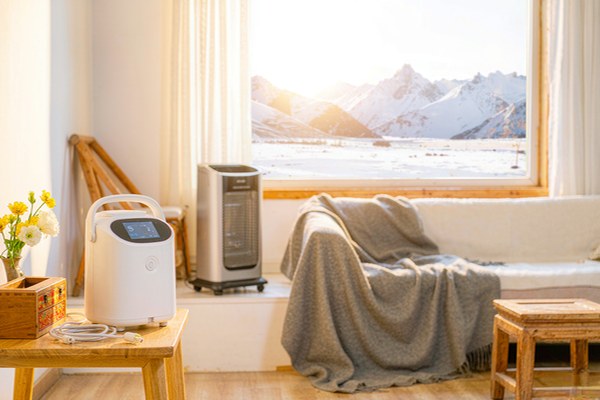
In late October in Lhasa, radiators, electric heaters, and yak-dung stoves are gradually coming into service, and the air is dry enough to hear static electricity. Every heating season, the reminders from fire-safety authorities always include one item: oxygen feeds fire. For households that keep a concentrator, oxygen outlets, or a steel cylinder, this is the time to get the relationship between "fire" and "oxygen" straight.
1. First understand a counter-intuitive fact: oxygen itself does not burn
Fire needs three things at the same time: a fuel (wood, paper, grease, clothing), an oxidizer (oxygen), and an ignition source (open flame, electric spark, static electricity). What concentrators, oxygen outlets, and steel cylinders change is the second item: they push the local oxygen concentration far above the normal 21%.
The consequence is not "oxygen will explode", but two subtler things. First, materials that should not burn can burn: an oil-stained rag or a cotton garment that is harmless at normal temperature can be ignited by a single spark in an oxygen-rich environment. Second, fire burns faster and more fiercely: the same pile of paper burns several times faster and more violently in pure oxygen than in air, and the time left to react is sharply compressed. Science China's popular-science content repeats the point: oxygen is a strong oxidizer, not a flammable gas. What is to be guarded against is not oxygen itself, but the combination of "oxygen plus fire".
2. These "fires" at home should stay away from oxygen
Ignition sources in plateau households are far more numerous than people imagine:
1. Open flames: gas stoves, butter lamps and offering lamps (a daily item in Tibetan households, and the most easily overlooked spot), braziers and yak-dung stoves, candles, and smoking. In the area and rooms where oxygen is supplied, this entire class of ignition sources should be cleared out, with no exception for "just for a moment".
2. Electric heat and sparks: electric heaters, the aging wiring of electric blankets, and the arc from plugging and unplugging high-power appliances. Heaters are best kept out of rooms where oxygen is in use; keep enough distance between the concentrator and the electric heater, and do not block the unit's heat-dissipation and air-intake space.
3. Static electricity: in the dry winter, friction from synthetic clothing, taking off a sweater, or touching a door handle can all produce static sparks with enough energy to ignite flammable gases or oil vapour in an oxygen-rich environment. While using oxygen, wear cotton clothing, and keep alcohol, oily hand cream, and lighters away from the bedside.
4. Grease and cosmetics: oxygen markedly lowers the ignition temperature of oils. Before oxygen use, avoid oily skin and hand care products as much as possible, and do not carry grease-stained kitchen rags into the room where oxygen is in use.
3. Cylinder users: the old rules deserve a re-reading every heating season
Many households use both a concentrator and a steel cylinder. The safety essentials for cylinders are "secure, oil-free, insulated, open slowly": fasten the cylinder against a wall to prevent tipping; keep oil and grease away from the valve and fittings, and open the valve slowly rather than forcing it; keep cylinders away from radiators, stoves, and direct sunlight, and do not leave them on balconies where night temperatures plummet; leave residual pressure in the cylinder rather than emptying it completely, to prevent back-flow of air. Any modification or mixed connection, such as plumbing a cylinder into a home concentrator line, must be assessed by professionals before implementation; GB 50751-2012, the technical code for medical gas engineering, sets explicit requirements for medical gas piping and valves.
4. In case of leakage or fire: cut the source first, then escape
An oxygen leak does not itself catch fire, but it makes everything around it far more flammable. If you hear an abnormal hiss or notice abnormal pressure at an oxygen outlet, the first step is to close the valve or switch off the concentrator and open windows for ventilation. Throughout this process, do not switch electrical appliances on or off, do not use open flame, and do not make phone calls indoors: electric sparks and static electricity can both serve as ignition sources in an oxygen-rich environment.
If a fire does start, the order is: first close the valve to cut off oxygen, or cut the power; if you can, do it, it takes seconds. At the same time, call the family to evacuate and dial 119. If clothing catches fire, remember "stop, drop, and roll". A small fire can be smothered with an extinguisher or a thick blanket, but never throw water on an oil fire. Leave after-care to professionals; even minor burns should not be smeared with toothpaste or soy sauce at home.
5. Frequently asked questions
Q: Can I light a butter lamp for worship while using oxygen?
A: Absolutely not. An offering lamp is an open flame, and an oxygen-use environment is oxygen-rich; no amount of "being careful" can underwrite the combined risk. Offering lamps and incense must be kept completely separate from rooms where oxygen is supplied. This is the bottom line that must be held.
Q: Can an electric heater share a room with the concentrator?
A: Simultaneous use in the same room is not recommended. The heater's surface runs hot, and it is itself an electrical appliance, while the concentrator needs to dissipate heat and draw in air; cramming the two together creates both a fire hazard and performance problems for the equipment. Put the heater in the next room or the living room and leave the concentrator's room with enough ventilation space; that is the more stable arrangement.
Q: Is sleeping the whole night on oxygen the most dangerous scenario?
A: Night-time oxygen use is itself common and standard practice. What is genuinely dangerous is "an oxygen-rich environment plus an unattended ignition source". Clear out ignition sources and check the heater and electric blanket before bed; that is far more sensible than "not daring to use oxygen all night". Night-time oxygen plans for COPD and other patients should follow the doctor's instructions.
Q: Is dry winter static electricity really such a big deal?
A: In normal air, static is mostly just a "snap"; in an oxygen-rich environment, the same spark is enough to ignite a fuel sitting at the edge of ignition. The heating-season rules are simple: cotton clothing, keep some humidity, and switch equipment off before plugging or unplugging. All three cost almost nothing.
Get these arrangements straight and oxygen supply and heating no longer conflict. Xizang Kuyang maintains a local warehouse and service network in Lhasa with 48-hour response, offering on-site installation, filter replacement, and annual inspection; for any questions about home oxygen plans or safe layout, please call 15608996945.
References: Science China (Kepu China) popular-science content on home oxygen safety and fire protection; GB 50751-2012 Technical Code for Medical Gas Engineering; the dedicated safety and performance requirements for medical oxygen concentrators YY 9706.269-2021; and this site's article "Before Winter Sets In: A Home Oxygen Checklist for the Plateau".
Images are illustrative and may differ from actual product appearance. This article is a general science summary and does not constitute medical advice; follow your doctor's instructions for any oxygen therapy plan.