
China's First Local Standards for Civilian Oxygen-Supply Projects Take Effect in Tibet: Home Oxygen Engineering Now Has a Benchmark
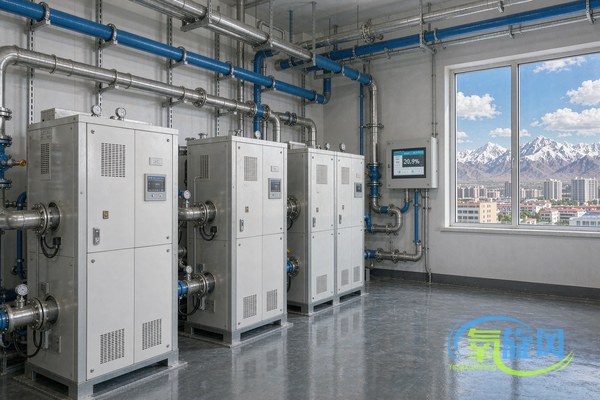
In Tibet, oxygen supply is becoming a piece of daily infrastructure as essential as heating and water. This year, the Market Supervision Administration and the Department of Housing and Urban-Rural Development of the Tibet Autonomous Region jointly released two local standards — the Design Standard for Civilian Oxygen-Supply Projects (DB54/T 0617-2026) and the Specification for Construction and Acceptance of Civilian Oxygen-Supply Projects (DB54/T 0616-2026). Approved and filed by the State Administration for Market Regulation, they took effect on April 15, 2026. They are the first dedicated technical standards in China for civilian-building oxygen-supply projects on the plateau, meaning that oxygen-supply projects in the region now have, for the first time, a dedicated "plateau yardstick" covering design, construction, and acceptance.
1. Why did oxygen supply need its own standards?
Previously, civilian oxygen-supply projects in the region had no dedicated construction standard and could only follow general medical and industrial standards. This caused practical problems: in winter, when temperatures fall to minus 20–30 degrees Celsius — precisely when people need oxygen most — oxygen equipment in many residential compounds fails to start or supplies oxygen intermittently; requirements for siting oxygen stations, electrical explosion-proofing, and fire safety were unclear; and there was long been no quantitative basis for how much oxygen to add at different altitudes, or which rooms suit diffuse (ambient) supply versus nasal cannula supply. Residents essentially relied on guesswork. The new standards target these pain points directly.
2. Highlights most relevant to daily life
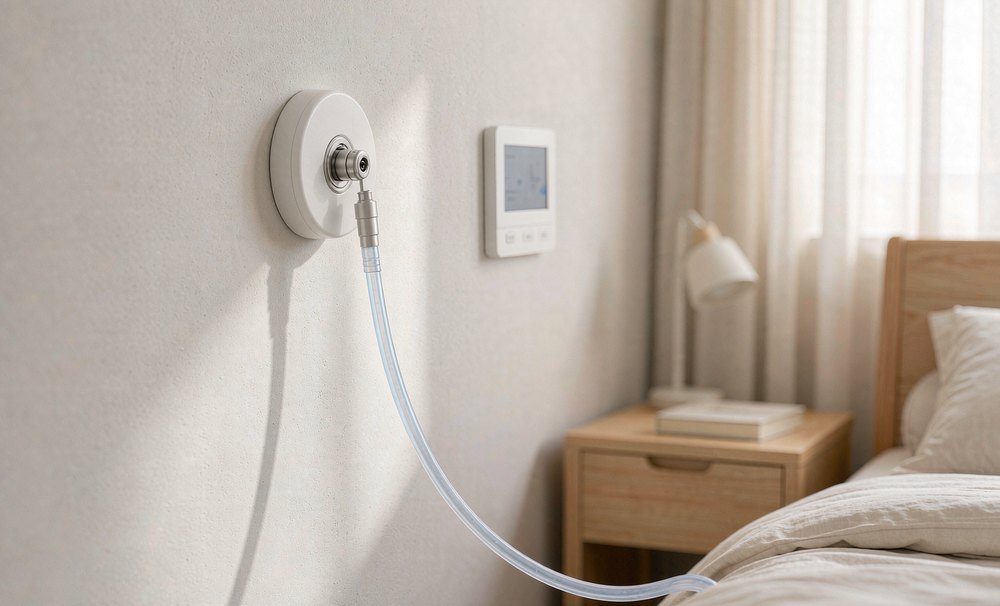
First, the standards creatively classify oxygen concentration into grades A, B, and C by altitude and population, differentiating long-term residents, newcomers, and office or living scenarios. Second, indoor terminals can combine nasal and diffuse supply modes, with bedrooms and living rooms independently switchable, supporting timed supply, intelligent control, and real-time concentration display — automatically starting and stopping for elderly residents whose blood oxygen drops at night, and setting upper-limit oxygen-concentration alarms for children. Third, for the plateau's extreme cold, oxygen equipment must start and run reliably at minus 30 degrees Celsius, and pipeline construction specifies anti-freeze deep burial, drainage slopes, and anti-corrosion and anti-static details. Fourth, civilian oxygen is strictly distinguished from industrial oxygen to safeguard everyday oxygen quality.
3. Whole-chain regulation from design to operation
The standards cover all new, renovated, and expanded civilian buildings above 3,000 meters — staff housing, resettlement communities, commercial housing, old residential compounds, and self-built houses. The design standard has 12 chapters and 3 appendices, covering oxygen-demand calculation, centralized and distributed supply systems, pipeline laying, and terminal installation; the acceptance specification establishes closed-loop management with photographic records of concealed works, plateau-specific acceptance, equipment traceability, and routine operational testing. Led by the regional housing department, more than 20 institutions including the China Urban Construction Design & Research Institute, Xi'an University of Architecture and Technology, and the Oxygen Supply Research Institute of Tibet University jointly drafted the standards, collecting 193 comments with an adoption rate above 70 percent. According to the department, the next step is to upgrade this "Tibetan experience" into a national standard.
4. What it means for residents and organizations
The most direct benefit of standardization is that projects become "inspectable, traceable, and comparable." This year, oxygen-supply projects have continued to land in Lhasa: the Lhasa Normal College oxygen-supply project completed bidding, and oxygen projects for the Dagze District care center and the Tibet Cultural Tourism and Creativity Park have successively started procurement or tendering. Going forward, whether for centralized organizational supply or household diffuse supply, users can check design and construction quality against the standards — a clear basis for choosing service providers.
5. A closing note
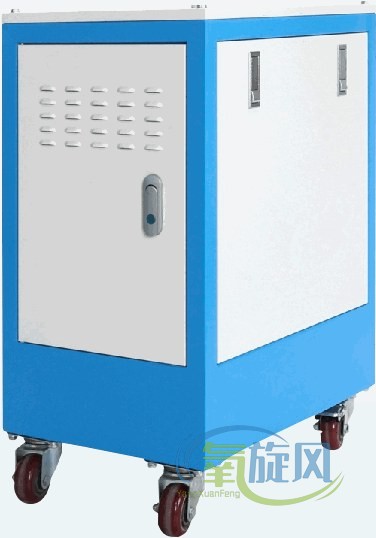
When oxygen supply has "a standard to rely on," every resident of the plateau benefits. Xizang Kuyang (Tibet Cool Oxygen) operates local warehousing and maintenance services in Lhasa, with home and portable oxygen concentrators in ample stock. Diffuse and piped oxygen-supply projects for hotels, guesthouses, organizations, and homes can be designed, built, and maintained according to the standards, with 48-hour response. For inquiries, please call 15608996945.
References:
1. People's Government of Tibet Autonomous Region: "China's First Set of Local Standards for Civilian Plateau Oxygen Supply Implemented in Tibet" (2026-06-18)
2. Announcement No. 4 of 2026, Market Supervision Administration of Tibet Autonomous Region (DB54/T 0616-2026, DB54/T 0617-2026), National Standard Information Public Service Platform
3. People's Government of Tibet Autonomous Region: "Region Issues Local Standards for Civilian Oxygen-Supply Projects" (2026-05-20)
4. Tibet Government Procurement Network: award notices and procurement intention announcements for local oxygen-supply projects
This article is an informational summary and science communication piece; it does not constitute medical advice.