
No Discomfort, No Need for Oxygen? On the Plateau, Hypoxia in the Elderly Is Often Silent: A Home Oxygen Guide for Older Adults
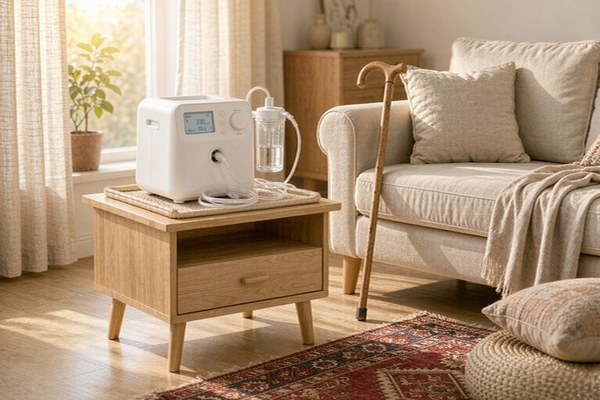
In the second half of October, Lhasa mornings are turning distinctly cold. For households with elderly members, this is the season when oxygen use deserves the most attention of the year. Ageing on the plateau is simply not the same as ageing at low altitude, and the issue of hypoxia needs to be taken proactively.
1. Why hypoxia in the elderly is more "hidden"
When young people arrive on the plateau, hypoxia usually announces itself loudly: headache, breathlessness, loss of appetite. The elderly are the opposite. Their perception of hypoxia is blunted, so at the same blood oxygen level an older person may simply seem "sleepier lately, off their food", and the family easily writes it off as "just getting old". On the plateau, rather than trusting feelings, active monitoring matters far more: keep a fingertip pulse oximeter at home, take the elder's reading at rest, and remember that a steadily falling number finds the problem earlier than self-perception ever does.
There is a second layer. The chronic conditions common in older people are all amplified at altitude: COPD, cor pulmonale, hypertension, and anaemia. Older adults who have lived on the plateau for years are also the group most prone to high-altitude polycythemia (HAPC): blood becomes more viscous and flows more slowly, and dizziness, fatigue, and bluish lips are all typical presentations. If an elder at home has any of these conditions, oxygen use is not "wellness" but a treatment that needs to be brought under a doctor's management.
2. Flow rate and duration: following the doctor comes first
Older users tend to fall into one of two extremes: either "dare not use it" for fear of dependence, or "use it hard", cranking the flow to maximum for peace of mind. Both are wrong. Oxygen carries no risk of addiction; "once you start, you can't stop" simply is not a thing. But long sessions at high flow bring no extra benefit either, and easily lead to a dry, bleeding nose. For elders with COPD or similar conditions needing long-term oxygen therapy, the goal is not "the higher the better". The Global Initiative for Chronic Obstructive Lung Disease (GOLD) lists a resting oxygen saturation of 88% or below as one of the main indications for long-term home oxygen therapy, with the treatment target usually maintained in the 88%-92% range; the exact regimen must be set by a doctor based on arterial blood gas results. For elders without a doctor's prescription, start with a low flow and short sessions, aiming for resting saturation stable at 90% or above with symptoms relieved, and consult a doctor before any adjustment.
3. Equipment must be "handy" and, above all, safe
1. Do not skip the humidifier. An elder's nasal mucosa is more fragile, so fit a humidifier bottle and change sterile distilled water or cooled boiled water daily; do not use tap or mineral water (they encourage biofilm growth).
2. Replace consumables regularly. Nasal cannulas are for one person only and should be replaced about once a week; check the alae of the nose and the skin behind the ears regularly, since prolonged pressure can cause pressure injuries.
3. Mind the placement. Leave clearance around the machine for heat dissipation and air intake, and keep it well away from heaters and open flame. Elderly homes often contain electric heaters and butter lamps; keep a clear distance from the oxygen environment. Throughout the heating season this matters most of all.
4. Leave a small night light on. Elders get up often at night; route the oxygen tubing away from walkways so it cannot trip anyone. If the machine is noisy, put it outside the bedroom door and bring the oxygen in with an extension tube.
5. Have a power-outage plan. Confirm a backup arrangement in advance (backup power or a steel cylinder), so that an elder's oxygen therapy is never cut off abruptly.
4. Four practical things the children can do
1. Help keep records. Once a day, morning and evening, jot down the resting saturation and any symptoms; bringing this to a follow-up consultation is far more useful than saying "recently it's been fine".
2. Keep an eye on consumables. Changing the water, replacing the cannula, cleaning the intake filter: elders easily forget these, so check them whenever you visit.
3. Get a routine blood test periodically. Haemoglobin and haematocrit are important indicators; an abnormal rise should raise suspicion of HAPC and warrants a timely hospital visit.
4. Do not play "family doctor". How far to adjust the flow, and whether to change medication, are the doctor's decisions. The children's job is to report observed changes accurately to the doctor, not to fiddle with the equipment settings themselves.
5. Frequently asked questions
Q: An elder's saturation is around 90%. Is that a problem?
A: For elders who have lived on the plateau long-term, a resting saturation slightly below that of lowland populations is common, and a single reading is no cause for panic. But if it stays below 90%, or comes with obvious breathlessness, bluish lips, or unusual drowsiness, seek medical assessment promptly; do not put it off.
Q: Can oxygen "prevent disease"?
A: Oxygen must not be treated as a cure-all wellness measure. What oxygen improves is the hypoxic state; it is symptom support, not a substitute for seeing a doctor, taking medication, and living healthily. Using it for those with a genuine need is respect both for the equipment and for the elder.
Q: Can a portable oxygen bag replace a concentrator?
A: Only in emergencies. An oxygen bag's concentration and flow cannot be controlled, and it lasts only a short time, so it suits brief outings; long-term home oxygen therapy still needs equipment with controllable concentration and flow.
Q: What if the elder resists using oxygen?
A: Most resistance comes from "fear of dependence" and "the hassle". Framing oxygen as "lightening the load on heart and lungs", and building the habit with short, low-flow sessions, works far better than forcing it; when resistance is strong, starting with night-time use is also an option.
Using oxygen for an elder is, in essence, the art of "just right": enough, but not excessive; standardised, but not fussy. Xizang Kuyang maintains a local warehouse and service network in Lhasa with 48-hour response, offering on-site installation, filter replacement, and annual inspection. For any questions about home oxygen plans for the elderly or equipment selection, call 15608996945.
References: Global Initiative for Chronic Obstructive Lung Disease (GOLD) report (indications for long-term oxygen therapy and target saturation ranges); Science China, "Home Oxygen Therapy: Doing It Safely"; YY 9706.269-2021 (safety and performance requirements for oxygen concentrators); GB 50751-2012, Technical Code for Medical Gas Systems.
Images are illustrative and may differ from actual product appearance. This article is a general science summary and does not constitute medical advice; follow your doctor's instructions for any oxygen therapy plan.