
Scan and Breathe: 350 Shared Oxygen Concentrators Arrive in Lhasa and at Mount Kailash
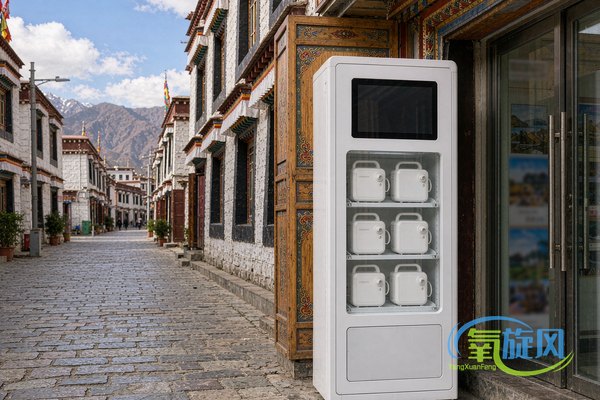
In early October 2026, a compact piece of industry news began circulating in China's oxygen sector: shared oxygen concentrators developed by Shanghai Lianfeng Gas have been deployed in Lhasa and around Mount Kailash, with a first batch of 350 units now in service. The units run on a scan-to-rent model, offering mobile oxygen support to visitors and to people working at altitude.
The significance is not another brand. It is that oxygen on the plateau is appearing for the first time as a service rather than a product: scan with WeChat, wear it on a shoulder strap, return it when done. Because the devices generate oxygen on site, there is no refilling chain to maintain. Units are now placed at travel agencies, vehicle fleets, restaurants, ticketing offices and Kailash service points.
1. From selling a machine to scanning a code
Plateau oxygen used to come in two forms: buy or rent a device (or a cylinder) and keep it, or use a fixed terminal at a hospital or hotel. Shared rental fills the gap in between — short, repeated, on-demand use. An earlier marker of this strategy: on 27 January 2026, Tibet Lianfeng signed a strategic investment agreement with Hualing Times, with a first-phase investment of RMB 1 billion covering oxygen enrichment, plateau heating and wellness tourism.
2. Why now: demand is becoming year-round
China Tibet News and China News Service reported on 8 October 2026 that Lhasa railway station handled 100,900 passenger departures during the National Day holiday, up 18,000 year on year, with 18,500 on 1 October alone — a record since the station opened. Listed Tibet Tourism (600749.SH) reported H1 2026 revenue of about RMB 94.23 million (+4.31%) and net profit of RMB 2.9092 million (+38.98%); revenue in the Ngari (Ali) region grew 322%. As travel spreads across seasons, oxygen demand shifts from emergency to everyday — and supply shifts from one-off cylinders to a scheduled service network.
3. The technology: how PSA turns air into oxygen
These units use pressure swing adsorption (PSA). A fan draws in air, a compressor pressurises it into a zeolite sieve tower; under pressure the sieve adsorbs nitrogen preferentially and oxygen passes through enriched; depressurising releases the nitrogen and regenerates the sieve. Two towers alternate to deliver a continuous flow. According to Yu Yao, the company's Tibet regional manager, oxygen concentration can stay above 90% during stable output.
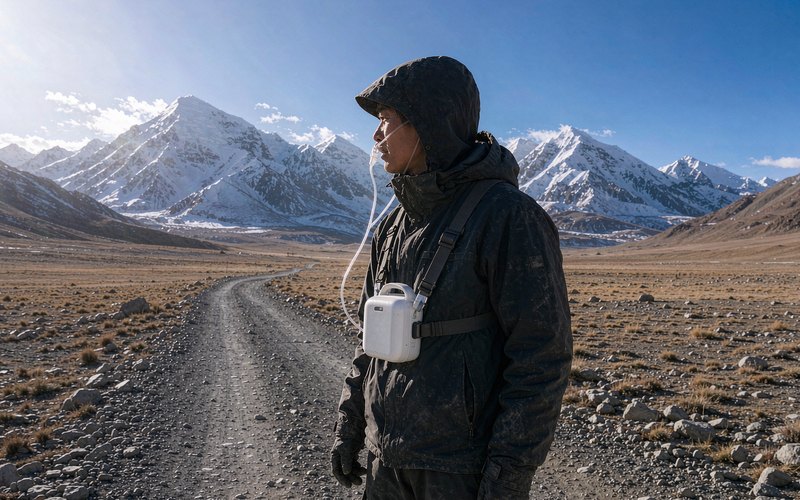
The hard part is the plateau: low pressure reduces the total air mass per cycle; dust and sand clog filters and wear the sieve; large day-night temperature swings and cold affect batteries and seals. The teams upgraded intake boosting, sand filtration, low-temperature power supply and the sieve system, validating prototypes in the lab and then iterating in Tibet.
One point deserves emphasis: the sieve changes the nitrogen-to-oxygen ratio, so the percentage can hold — but thin air at altitude means each cycle captures less total air. A unit rated 5 L is not the same machine at sea level and at 4,500 m. Plateau validation and altitude compensation matter more than the nameplate flow.
4. What sharing solves, and what it must answer
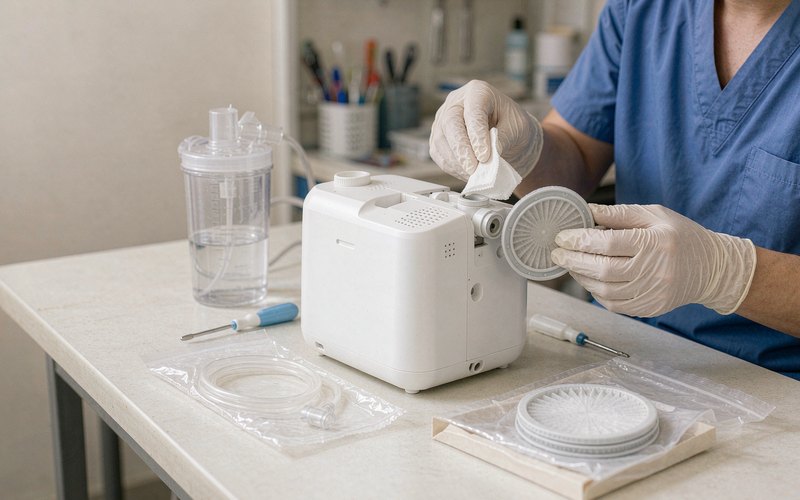
It removes weight, deposits, scarce refilling points and the guesswork of choosing a flow rate. But high-frequency rotation raises hard questions: single-use, sealed nasal cannulas opened in front of the user (Ke Pu China advises one cannula per person, never shared, replaced weekly); who cleans housings, humidifier bottles and filters, how often, and whether records exist; whether output concentration is tested periodically; what happens on a flat battery or weak output; and whether flow steps, battery life and the maximum rated altitude are disclosed.
5. Six checks before you scan
Verify the medical device registration certificate on the NMPA site and match it to the product name and intended use. Look for the relevant standards: YY 9706.269-2021 for oxygen concentrator safety, YY 1468-2016 for concentrator supply systems feeding medical gas pipeline systems, GB 50751-2012 for medical gas engineering; for institutional systems, the NMPA's 2026 revised review guideline for medical molecular sieve oxygen systems (Class II, code 08-04-01). Confirm altitude suitability and validation data. Inspect consumable packaging and humidifier water (sterile distilled or cooled boiled water, not tap or mineral water). Check charge and runtime. Read the repair, return and liability terms.
6. Rent, buy, or prepare differently
Rent for the first two or three acclimatisation days, trips under a week, once-a-year visitors, or to test whether you need long-term oxygen. Buy if you live and work on the plateau, have an elderly or chronically ill family member needing regular therapy, travel up several times a year, or require dedicated consumables. For long remote routes in Ngari or high-altitude trekking, note the report's own caution: a portable concentrator supplements but cannot replace medical oxygen cylinders; in remote areas and emergencies a cylinder remains the safer choice — and route planning, medical cover and descent plans matter more than any device.
Also: oxygen is not a preventive measure. The Tibet Department of Culture and Tourism published expert guidance on 6 October 2026 stating that "preventive oxygen" before arrival has essentially no benefit and may backfire; Dr Ma Jiangwei noted that extra oxygen at low altitude is unnecessary and may reduce hypoxia tolerance; Dr Zhang Yijie of Lhasa People's Hospital warned against over-reliance on oxygen equipment instead of gradual acclimatisation.
7. FAQ
Does oxygen create dependency? No — Dr Li Ran of Peking University People's Hospital told CCTV News on 3 October 2026 that the claim has no scientific basis; oxygen should still be given for altitude sickness, and duration depends on how long symptoms last. Is higher flow better? No; dry plateau air plus high flow dries and cracks nasal mucosa. Is the train gentler? Dr Zhao Yunfeng suggests first-time visitors with time to spare prefer the train, as altitude rises gradually. Renting vs buying depends on frequency. And never share a nasal cannula.
8. Local use and maintenance in Tibet
Dryness, dust and cold are the three enemies. Use a humidifier bottle with daily water changes; clean intake filters more often than the manual suggests — most "weaker output" complaints are clogged filters; never leave the unit outdoors or in a car overnight; keep clearance around the machine, away from heat, oil and open flame, since the output is oxygen-enriched; and check output concentration periodically, as molecular sieve performance declines with hours of use.
Xizang Kuyang keeps local warehousing and a repair point in Lhasa with a 48-hour response, offering installation, filter replacement and annual testing. Call 15608996945.
References: Jiefang Daily / Shangguan News (4 Oct 2026); Kongfen.org.cn; China Tibet News and China News Service (8 Oct 2026); Tibet Tourism H1 2026 report and 28 Sep 2026 investor briefing; Tibet Department of Culture and Tourism (6 Oct 2026); CCTV News (3 Oct 2026); Ke Pu China; NMPA review guideline (2026 revision); YY 9706.269-2021, YY 1468-2016, GB 50751-2012; DB54/T 0616-2026 and DB54/T 0617-2026.
Images are illustrative and may differ from the actual products. This article is general information, not medical advice.