From County Housing to Township Classrooms: Tibet's Plateau Oxygen-Supply Projects Move Down to the Grassroots in Autumn 2026
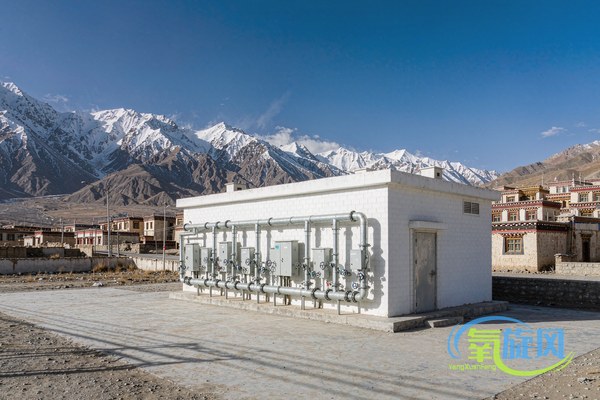
The most notable change in Tibet's plateau oxygen-supply sector this autumn is not that another oxygen concentrator was sold, but that the focus of oxygen-supply engineering is shifting downward — from prefecture cities and county seats to townships, schools and grassroots units.
1. The newest model: Lhuntse County's RMB 42 million oxygen project covering 10 townships
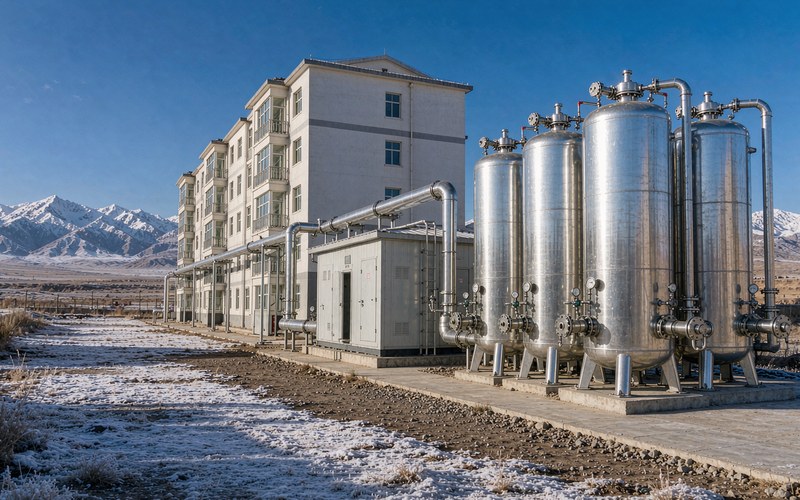
According to a Tibet Daily report dated October 1, the heating and oxygen-supply livelihood project in Lhuntse County, Shannan City, has progressively come into service, with stable heating and oxygen supply now available in county-seat staff housing and government offices. The oxygen component represents a total investment of RMB 42 million, covers 10 townships including Lhuntse Town and Ritang Town, benefits more than 2,200 residents, and fully covers 15 priority categories of people. Lhuntse's approach is "scientific zoning": four townships, including Lhuntse Town, use centralized liquid-oxygen supply, while the remaining townships are equipped with small oxygen concentrators. The parallel heating component involves RMB 330 million and covers 200,000 square meters, keeping indoor temperatures stably above 18 degrees Celsius in county-seat staff housing, public rental housing, low-rent housing and government office buildings. The report also notes that running centralized heating and centralized oxygen supply together has solved, at the root, the long-standing problem of frozen water pipes in winter. Next, Lhuntse will apply for a second-phase heating extension and institutionalize routine operation and maintenance of both heating and oxygen equipment.
2. From county seats to townships and classrooms: a wave of projects moving in parallel
Lhuntse is not an isolated case. The Education Bureau of Shenzha County, Nagqu, published a procurement intention to equip classrooms at Shenzha County Middle School with 47 plateau diffuse oxygen units (60 L), four 20 L units and 196 smart diffuse terminals, with a budget of RMB 1.467 million covering oxygen piping, wall channelling, system airtightness testing, operator training and warranty maintenance. In Shigatse, the high-altitude township centralized oxygen-supply project in Yadong County was openly tendered as an EPCO (design-procurement-construction-operation) package with an estimated investment of RMB 25.9949 million, fully funded by state investment; liquid-oxygen stations will be built in Jiru Township, Duina Township, the hospital and government offices of Pagri Town, and Kangbu Township, with a planned 180-day construction period. Also in Shigatse, the second lot (re-tender) of the seven-township oxygen-supply project in Ngamring County lists a total oxygen-served floor area of 52,624.55 square meters and nine new liquid-oxygen vaporizer stations. On September 24, the Housing and Urban-Rural Construction Bureau of Gar County in Ngari issued a price-inquiry notice for 294 portable oxygen concentrators, explicitly requiring stable operation above 4,000 meters, oxygen concentration maintained at 93% ±3%, unit noise at or below 60 dB(A), total weight with battery generally at or below 3 kg, and a full set of credentials including a medical device registration certificate. In addition, Rinbung County has published an intention to purchase 1,900 units of 5 L medical oxygen concentrators for cadres and staff, with a budget of RMB 4.6892 million.
3. Why the shift downward: three threads
First, standards came first. DB54/T 0617-2026 (Design Standard for Civilian Oxygen-Supply Projects) and DB54/T 0616-2026 (Specification for Construction and Acceptance of Civilian Oxygen-Supply Projects) took effect on April 15, 2026. Grassroots projects now have, for the first time, a dedicated basis for approval, design and acceptance, reducing the risk of "finished but unverifiable" work.

Second, the funding model has been upgraded. Instead of buying individual machines, projects now use EPC and EPCO packages that fold detailed design, equipment procurement, installation, commissioning and even operation and maintenance into a single contract. Even where township-level technical capacity is limited, the general contractor can deliver construction and upkeep.
Third, a long-term variable on the cost side. Tibet has designated the hydrogen-oxygen industry as the region's "No. 1 project," pursuing green-power hydrogen production with co-production of oxygen: oxygen is a by-product of hydrogen production, and the larger the scale, the lower the marginal cost of oxygen. In September, regional officials inspecting the hydrogen-oxygen industry in Lhasa stressed the need to "put demonstration first and size production to actual use," and to raise O&M efficiency while lowering operating costs. One caveat: this is a medium- to long-term cost improvement path. Today's livelihood oxygen supply still relies mainly on mature methods such as liquid oxygen, molecular-sieve concentrators and cylinder oxygen, and should not be over-interpreted in the short term.
4. What it means for residents, schools and organizations
For schools, classroom diffuse oxygen supply requires careful attention to terminal placement, operating noise and flow control during class hours, and must not disrupt teaching. For township organizations, the choice between a liquid-oxygen station and small concentrators depends on population size, transport radius and power-supply reliability; in high-altitude areas especially, cold-start capability and altitude adaptation ratings must be verified. For households and individuals, where centralized supply does not yet reach, home and portable concentrators remain the fallback. When purchasing, check for a medical device registration certificate and focus on altitude adaptation, oxygen-concentration stability, noise and the availability of local after-sales service. Whether centralized or distributed, oxygen use should follow the science: match the dose and the flow rate to actual need, and avoid prolonged high-flow intake without indication.
5. In closing
From a single machine to a room, and then to the piping network of an entire township, plateau oxygen supply is becoming genuine infrastructure. Tibet Kuyang operates local warehousing, delivery and repair services in Lhasa, with home and portable oxygen concentrators in stock. Diffuse and piped oxygen-supply projects for hotels, guesthouses, organizations and homes can be designed, built and maintained to standard, with a 48-hour response time. For enquiries, call 15608996945.
References:
1. Tibet Daily: "Heating and Oxygen-Supply Livelihood Project Comes into Service in Lhuntse County, Shannan City" (October 1, 2026)
2. China.org.cn Tibet channel: "Lhuntse County in Tibet Now Has Heating and Oxygen Supply" (2026-09-10)
3. Tibet Government Procurement Network: procurement intention for diffuse oxygen supply in classrooms at Shenzha County Middle School (2026-08-13)
4. Shigatse Administrative Approval and Public Service Bureau: EPCO tender for Yadong County high-altitude township centralized oxygen-supply project; re-tender of EPC lot 2 for Ngamring County seven-township oxygen-supply project
5. Gar County People's Government: price-inquiry notice on portable oxygen concentrator procurement by the Gar County Housing and Urban-Rural Construction Bureau (2026-09-24)
6. Rinbung County Housing and Urban-Rural Construction: 2026 government procurement intention announcement (Batch 1, 2026-08-11)
7. Tibet Autonomous Region local standards DB54/T 0617-2026 and DB54/T 0616-2026
Image credits: The cover and inline images in this article were AI-generated for illustrative purposes only and may differ from actual product appearance and project sites.
This article is a compilation of public information and general science writing. It does not constitute medical advice.