
Living with COPD on the Plateau: How to Use Home Oxygen Safely — A Long-Term Oxygen Therapy Guide for Chronic Respiratory Patients at High Altitude
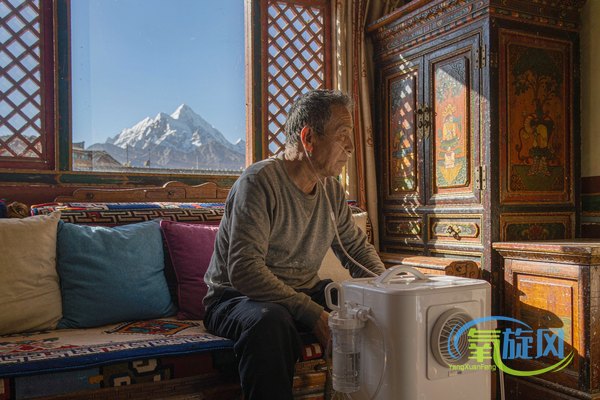
For people who live long-term above 3,000 meters, having COPD means facing two layers of oxygen deprivation at once. This article sets aside equipment specifications and answers one practical question: how should chronic respiratory patients on the plateau use home oxygen so that it is both safe and effective?
1. Why COPD is harder on the plateau
A study by the respiratory department of the Tibet Autonomous Region People's Hospital suggests that for COPD patients who live permanently above 3,000 meters, the persistent low-pressure, low-oxygen environment aggravates impaired gas exchange and hypoxemia and may promote pulmonary hypertension and chronic cor pulmonale, carrying a higher mortality risk (International Journal of Chronic Obstructive Pulmonary Disease, 2021).
Epidemiological data are also worth noting. A 2015 survey published in Chinese Journal of Public Health found that among residents aged 40 and above in the Tibet Autonomous Region, the prevalence of COPD was 6.16 percent (8.55 percent in men, 3.86 percent in women). A cross-sectional survey of populations living at 2,100 to 4,700 meters in Xinjiang and Tibet found an overall COPD prevalence of 8.2 percent at high altitude; prevalence among high-altitude men (9.3 percent) was lower than among lowland men (11.9 percent), but prevalence among high-altitude women (7.1 percent) was markedly higher than among lowland women (5.4 percent). The researchers attributed this to indoor air pollution from household burning of yak dung and firewood for heating and cooking, and to the high burden of tuberculosis on the plateau: roughly 5 percent of high-altitude residents have a history of tuberculosis, and in that group COPD prevalence reaches 11.6 percent.
The conclusion is direct: on the plateau, quitting smoking is not enough; reducing smoke exposure from heating and cooking matters just as much.
2. Who needs long-term home oxygen therapy: the hard criteria set by the guidelines
The Chinese Guidelines for the Primary Care Diagnosis, Treatment and Management of Chronic Obstructive Pulmonary Disease (2024) and the Guidelines for the Diagnosis and Treatment of Chronic Obstructive Pulmonary Disease (2021 revision) set out clear indications for long-term oxygen therapy:
First, a resting arterial partial pressure of oxygen (PaO2) of 55 mmHg or less, or an arterial oxygen saturation (SaO2) of 88 percent or less, with or without hypercapnia. Second, a PaO2 of 55 to 60 mmHg, or SaO2 below 89 percent, together with pulmonary hypertension, right heart failure or polycythemia (hematocrit above 0.55). Both are strong recommendations.
One point deserves emphasis: the basis for the decision is resting arterial blood gas analysis, not a subjective sense of breathlessness. According to China Science Communication, about 30 percent of patients with chronic lung disease experience "silent hypoxemia" — oxygen levels have already fallen markedly with no obvious discomfort, and by the time symptoms appear, lung function is often substantially impaired.
3. Three key numbers in oxygen therapy
Flow. Oxygen is usually delivered through a nasal cannula at 1.0 to 2.0 liters per minute. Adhere to the low-flow principle and avoid high-concentration oxygen, which can induce carbon dioxide retention.
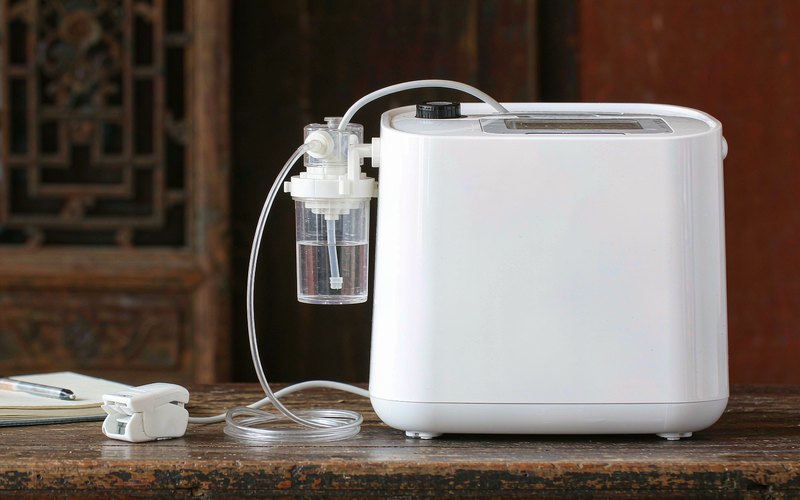
Duration. Daily oxygen use should exceed 15 hours, and should continue through the night. Some sources indicate that fewer than 12 hours of oxygen per day markedly increases mortality risk.
Target. The guidelines set the goal of achieving a resting PaO2 of at least 60 mmHg at sea level and/or raising SaO2 to 90 percent.
Here is a plateau-specific caution: the guideline targets are benchmarked to sea level. Lhasa sits at about 3,650 meters, where atmospheric pressure is roughly two-thirds of that at sea level, so even healthy residents have lower blood oxygen than lowland populations. The specific flow rate and target oxygen saturation for a plateau patient should therefore be individualized by a local physician based on altitude and blood gas results — do not simply copy lowland figures and increase the flow yourself.
4. Four things to watch in home oxygen therapy on the plateau
First, nighttime and early morning. Nocturnal hypoxemia is more pronounced on the plateau than in the lowlands, and blood oxygen falls further during sleep, so continuous overnight oxygen is often the single most effective measure.
Second, guard against silent hypoxemia. Keep a fingertip pulse oximeter and measure at fixed times — at rest, after activity and at night — recording the trend. If readings keep falling, or the pulse waveform is abnormal, seek medical care promptly and check the equipment for faults at the same time.
Third, control heating and cooking smoke. As noted above, this is an important reason why COPD prevalence among plateau women exceeds that of lowland women. Improving stoves and ventilation is as important as using oxygen.
Fourth, confirm that the equipment suits the altitude. The performance of molecular sieve oxygen concentrators changes in low-pressure environments. When purchasing, state your altitude requirement explicitly, verify oxygen concentration and heat dissipation under high-altitude conditions, and prioritize models that maintain stable output, run quietly, and hold a medical device registration certificate.
5. Can patients travel to the plateau? What about those already living there?
In a science communication interview, Dr. Huang Ke of the Department of Respiratory and Critical Care Medicine at China-Japan Friendship Hospital advised that patients with mild, stable COPD who have been on long-term standardized treatment may travel to high altitude for short periods, but should not settle there long-term; patients with severe COPD should not go. The practical test is whether adequate blood oxygen can be maintained while using oxygen — generally no lower than 90 to 92 percent. If it cannot be maintained, do not go.
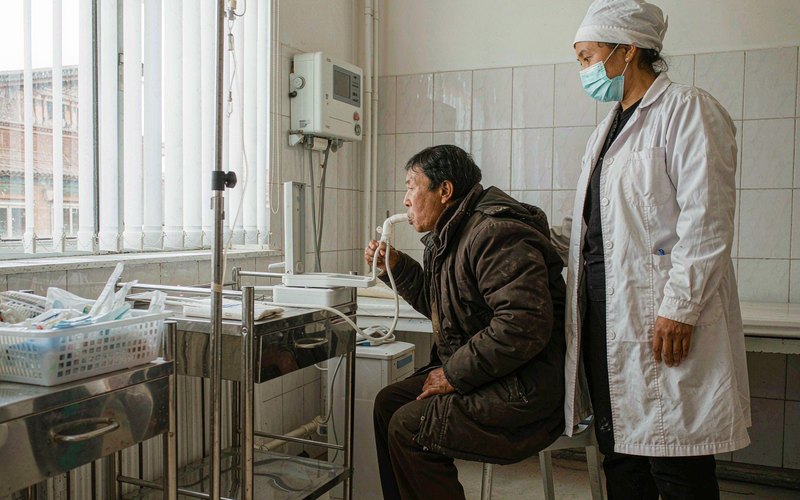
For patients already living long-term on the plateau, we recommend blood gas analysis every three months and lung function assessment annually. If the condition repeatedly worsens acutely, or pulmonary hypertension or cor pulmonale has already developed, a specialist should assess whether treatment or long-term residence at lower altitude is necessary.
6. Final thoughts
Oxygen on the plateau is never a matter of "the more the better," but of "the right amount being what works." Tibet Kuyang maintains local warehousing, distribution and repair services in Lhasa, with home and portable oxygen concentrators in stock, and can advise on blood oxygen monitoring and equipment selection, with a 48-hour response. For inquiries, please call 15608996945.
References:
1. Chinese Guidelines for the Primary Care Diagnosis, Treatment and Management of Chronic Obstructive Pulmonary Disease (2024), Chinese Journal of General Practitioners, 2024, 23(6): 600-624
2. Guidelines for the Diagnosis and Treatment of Chronic Obstructive Pulmonary Disease (2021 revision), Chinese Journal of Tuberculosis and Respiratory Diseases, 2021, 44(3): 170-205
3. Epidemiological Survey of Chronic Obstructive Pulmonary Disease among Residents Aged 40 and Above in Tibet, 2015, Chinese Journal of Public Health
4. Clinical and Radiological Features of COPD Patients Living at 3000 m or Above Sea Level in the Tibet Plateau. International Journal of Chronic Obstructive Pulmonary Disease, 2021, 16: 2445-2455
5. China Science Communication: Five Steps to Safe Home Oxygen Therapy for Chronic Lung Disease
6. Dr. Huang Ke, China-Japan Friendship Hospital: science communication interview on high-altitude travel for COPD patients
7. Guo et al.: cross-sectional survey of COPD prevalence among populations at 2,100-4,700 meters in Xinjiang and the Tibet Autonomous Region
Disclaimer: This article is an educational summary and does not constitute medical advice. The images are illustrative; actual product appearance may differ.